

Photo: Min ZHU and Jie JIAO
During the keynote session, Jianhua analyzed the impact of AI on the financial system and business operations, outlined application scenarios of AI in finance, particularly its role in the “Five Major Areas” of financial practice, and highlighted obstacles, potential risks, and regulatory trends in AI adoption. Ke shared insights from three of his research papers, discussing nonlinear financial models, integration of traditional theoretical models with LLMs, prompt engineering, and privacy protection, while stressing the importance of non-state capital in AI investment. Dayong proposed that AI’s impact on finance follows two core paths: incremental and disruptive. He analyzed industry attitudes and application scenarios for both paths and recommended that banks establish robust LLMs gateways while strengthening collaboration between business and technology departments. Weidong elaborated on AI’s value in finance from three dimensions—business restructuring, technological restructuring, and ecosystem restructuring, while analyzing potential risks and noting that financial ecosystems are shaped not only by technology but also by institutional frameworks.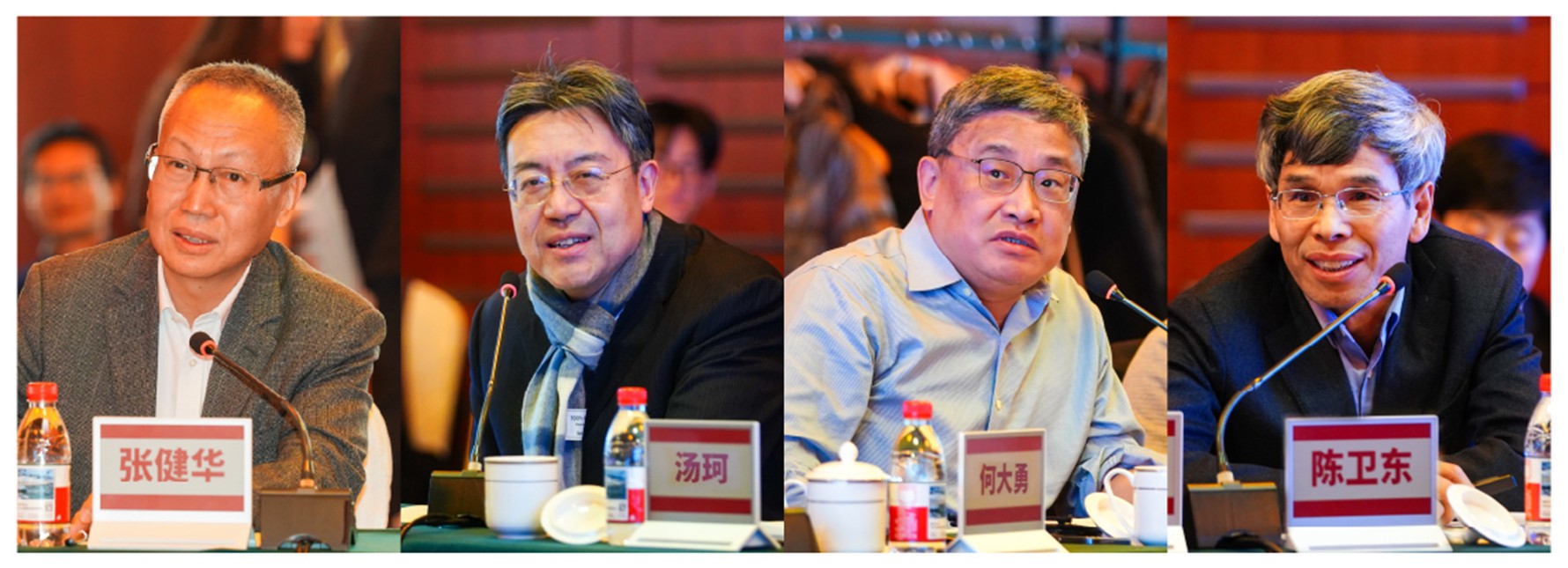
Photo: From left to right— Jianhua ZHANG, Ke TANG, Dayong HE, Weidong CHEN speaking
In the discussion session, Ke GONG reviewed emerging trends in AI development, including Mixture of Experts, multi-agent systems, embodied intelligence, open-source models, and green development, while pointing out underlying theoretical issues and risk concerns. Xian argued that the licensing regulatory nature of the financial industry makes it difficult for AI to deliver disruptive shocks, though technological iterations will still drive new rules and competition. Subsequently, Weidong, Dayong, Jianhua, and other participants engaged in in-depth discussions on topics such as improving regulatory frameworks, balancing privacy protection with technological progress, and the competitive landscape of China’s financial sector, particularly banking. In his closing remarks, Min ZHU stated that the financial sector is the best entry point for “AI+” integration. He emphasized the need to uphold the bottom line of financial regulation and institutional integrity while staying at the forefront of AI technology development, seeking an optimal balance between these two priorities.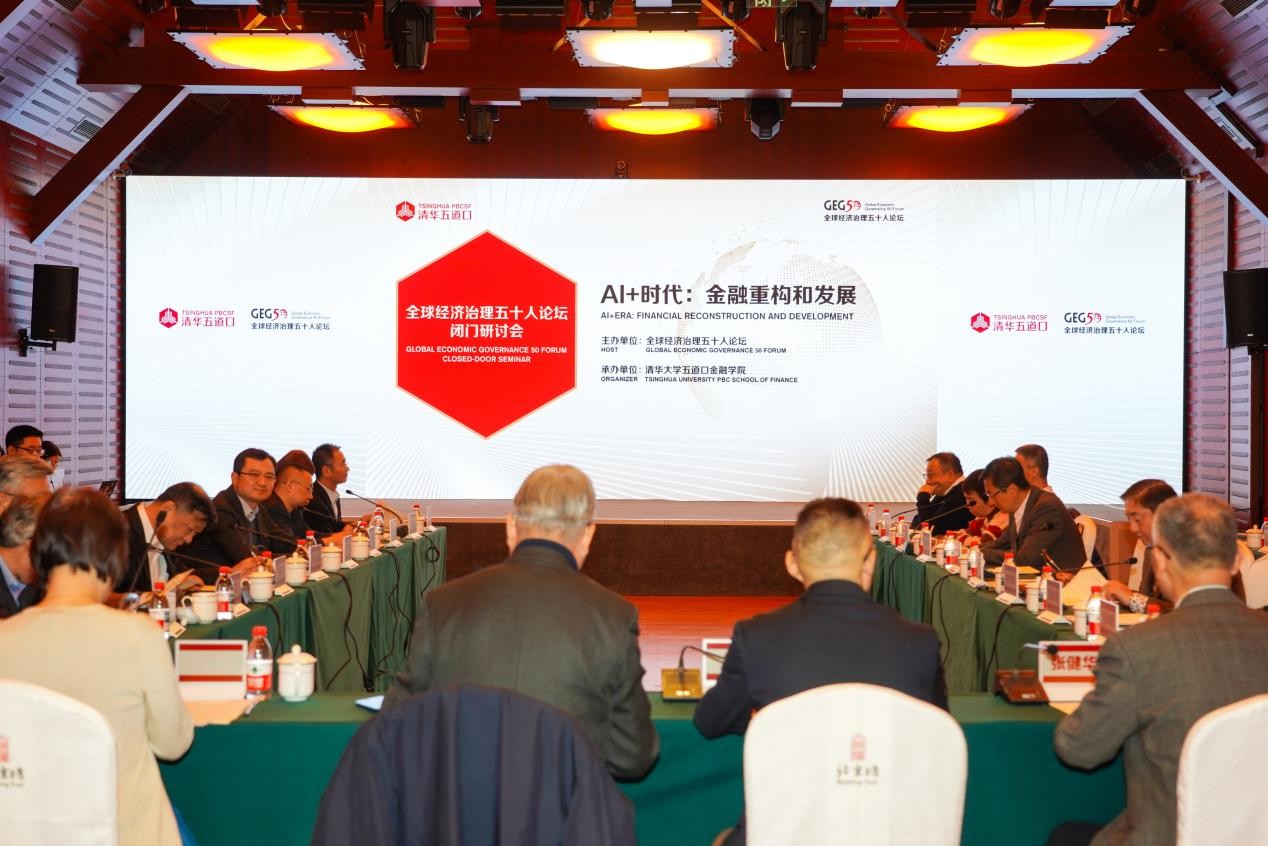
Photo: Closed-door seminar venue
This seminar was hosted by the GEG50 and organized by Tsinghua University PBC School of Finance.